
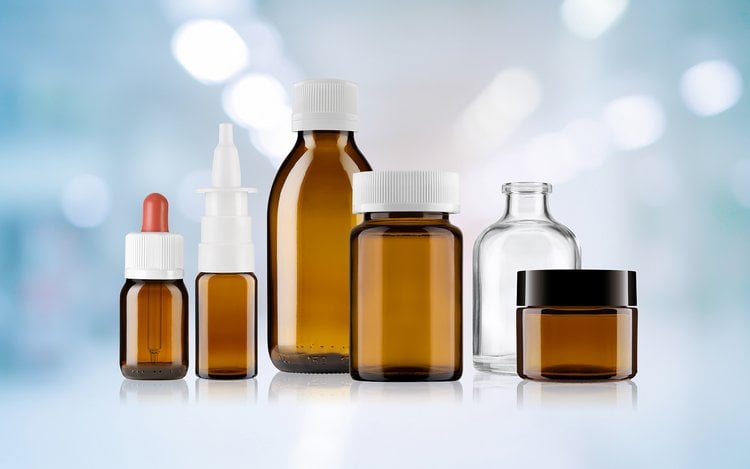
Glass jars continue to anchor modern pharmaceutical packaging because they preserve formulations without adding variables. Manufacturers prioritize them when purity, stability, and tight controls are non-negotiable, particularly for sensitive biologics, solutions, and semi-solids. In this article, we will look closely at how glass inhibits chemical leaching, the sterilization methods that keep containers sterile and pyrogen-free, and how specialized tints protect light-sensitive drugs. You’ll also see why precision manufacturing supports accurate dosing and how regulations define what “pharma grade” really means. Throughout, we’ll reference practical considerations from sourcing partners like Ashland Container and the larger ecosystem that supports the needs of the Pharmaceutical Packaging Industries.
How Glass Prevents Chemical Leaching and Maintains Purity
Glass is valued for its inherent chemical inertness, which protects formulations from unwanted reactions and extractables. Type I borosilicate glass, commonly used for parenterals and high-sensitivity medications, resists hydrolysis and minimizes ion exchange, unlike certain plastics that can interact with solvents or lipophilic compounds. This stability helps maintain product potency, pH balance, and clarity over shelf life, especially under stress conditions like temperature cycling. When the risk profile is high, glass’s neutral surface reduces the probability of contaminants migrating into the drug product. That reliability is one reason development teams still default to glass for products where a single unexpected variable can skew clinical outcomes.
Borosilicate composition and surface chemistry
The silica-rich network of borosilicate glass creates a stable matrix that is less reactive with aqueous solutions and many organic solvents. Hydrolytic resistance is benchmarked in lab tests measuring alkali release, and Type I glass consistently demonstrates superior performance under these conditions. Surface treatments, such as silanization for select applications, can further reduce reactivity for highly sensitive biologics or peptides. Compatibility testing frequently includes accelerated aging and photostability studies to verify that no perceptible leachables emerge during storage. This systematic vetting helps ensure drug integrity while aligning with risk-based quality approaches expected in pharma.
Sterilization and Cleanroom Standards for Pharma-Grade Containers
Pharmaceutical-grade glass jars are processed under rigorous sterilization and cleanroom conditions to ensure they meet microbial and particulate specifications. Dry-heat depyrogenation tunnels are frequently used to reduce endotoxins on glass surfaces, often operating above 250°C with validated exposure times. Some jar formats are sterilized via steam autoclaves, while gamma irradiation or e-beam may be used when compatible with closures and liners. Equally important is handling within ISO-classified cleanrooms, where HEPA filtration, pressure differentials, and personnel protocols minimize particulate introduction. For organizations working across the Pharmaceutical Packaging Industries, consistent control from forming to final packaging reduces the risk of variability between lots.
Validated processes that protect product integrity
Sterilization and depyrogenation are validated to deliver a targeted Sterility Assurance Level (for sterile products) and documented control of endotoxin burden. Environmental monitoring programs track air and surface bioburden, particle counts, and temperature/humidity, providing ongoing verification that processes remain within state of control. Container-closure integrity is safeguarded by appropriate cleaning, lubrication controls, and post-sterilization handling that preserves seal interfaces. Manufacturers also apply robust gowning, equipment maintenance, and line clearance procedures to prevent cross-contamination. These controls, supported by detailed batch records and deviation management, uphold the full lifecycle quality expected for pharmaceutical containers.
Amber and Cobalt Glass Options for Light-Sensitive Medications
Many active pharmaceutical ingredients degrade when exposed to UV and short-wavelength visible light, making tinted glass a vital safeguard. Amber glass absorbs UV and some blue light, extending the stability of compounds prone to photolysis, including certain antibiotics, vitamins, and biologic components. Cobalt-tinted glass can offer enhanced shielding in selected wavelengths, though it is typically evaluated case by case to avoid any unintended analytical impacts. Properly specified tints reduce packaging-driven variability, enabling more reliable stability profiles during real-world distribution and storage. This protection is especially important for products displayed under retail lighting or used in settings with varying illumination.
Selecting tint and geometry based on formulation
Photostability testing, such as studies aligned with ICH Q1B, helps define the required level of protection and confirm that amber or cobalt glass performs as intended. The choice of jar geometry and wall thickness further influences light transmission and can be optimized to minimize exposure for sensitive formulations. Labels and secondary packaging also contribute to light shielding, and coordinated selection prevents gaps in protection across the product’s presentation. For highly sensitive drugs, teams may integrate foil seals and specialized closures to enhance barrier properties. Together, these measures allow tinted glass to sustain potency without complicating analytical controls or patient use.
Precision Manufacturing That Supports Accurate Dosage Delivery
Precision in container geometry ensures consistent dosing, whether jars hold powdered antibiotics, viscous ointments, or reconstitution kits. Tight dimensional tolerances control brimful capacity, neck finish, and thread profile, which in turn affect closure torque, liner compression, and vapor transmission. Roundness, base stability, and wall uniformity influence both filling accuracy and label application on high-speed lines. When volume reproducibility is critical, calibrated containers reduce variability in scoop or spoon dosing and help standardize compounding workflows. In practice, this attention to detail prevents minor dimensional deviations from cascading into measurable dose errors.
Metrology, sampling, and in-process controls
Advanced metrology tools—coordinate measuring machines, optical scanners, and inline vision—validate jar attributes in real time and feed statistical process control. Capability indices (such as Cpk) guide adjustments before drift approaches specification limits, supporting continuous improvement in output quality. Manufacturers that partner with suppliers like Ashland Container benefit from consistent neck finishes and surface properties that simplify closure selection and torque validation. Careful control of annealing cycles improves mechanical strength and reduces residual stresses that might otherwise cause microfractures or chipping. These controls collectively uphold accurate fill volumes, stable seals, and predictable performance from factory to pharmacy.
Regulatory Compliance Under FDA and USP Guidelines
Glass containers used for medicines must meet stringent standards established by the FDA and compendial bodies. USP <660> specifies physicochemical tests for glass containers, including hydrolytic resistance, while related chapters and guidance outline performance expectations in use. FDA current good manufacturing practice (cGMP) regulations under 21 CFR Parts 210 and 211 require appropriate controls, documentation, and testing for components used in drug manufacturing. For sterile products, container-closure integrity expectations are aligned with USP <1207>, emphasizing probabilistic and deterministic methods. Companies operating across the Pharmaceutical Packaging Industries rely on these harmonized frameworks to ensure reproducible safety and quality.
Documentation and change control
Regulatory readiness hinges on robust documentation: Certificates of Analysis, lot traceability, sterility and depyrogenation validations, and material declarations. Formal change control ensures that any modification to composition, forming, tinting, or sterilization is risk-assessed and communicated to downstream users. Supplier qualification typically includes audits, quality agreements, and periodic reviews of corrective and preventive actions to maintain a state of control. For clinical and commercial programs alike, IQ/OQ/PQ of critical equipment and validated data integrity practices underpin compliance. These fundamentals streamline submissions and inspections while reinforcing the trust that global regulators place in validated glass packaging systems.
Why Glass Remains a Trusted Material in Clinical Supply Chains
Clinical supply chains demand materials that remain stable through variable storage temperatures, shipping stresses, and complex handling. Glass jars offer thermal resilience for cold-chain biologics and controlled room temperature products, with minimal risk of sorption or diffusion that could alter concentration. Their impermeability helps maintain solvent balance in liquids and prevents volatile loss in semi-solids during long distribution routes. When specified correctly, impact resistance and packaging design reduce breakage risk without sacrificing material purity. This reliability helps study sponsors and manufacturers keep focus on trial integrity, not container variability.
Future-ready innovations without compromising fundamentals
Sustainability goals, including recyclability and reuse programs under controlled conditions, continue to favor glass in many scenarios. Meanwhile, serialization-ready labels, RFID-enabled closures, and tamper-evident systems are integrating smoothly with established jar formats. Partners such as Ashland Container are advancing precision forming and inspection to meet evolving expectations without altering the core chemistry that protects drugs. Across the Pharmaceutical Packaging Industries, these enhancements build on glass’s proven baseline: chemical inertness, robust light protection options, and validated sterilization pathways. The result is a packaging platform that adapts to new therapies and logistics models while preserving the quality attributes patients and regulators expect.

Comments are closed.