Category

Featured

Category


The importance of structural factors in the decline of the art market leads the rapporteur to consider that, if tax adjustments are necessary, given the differential in charges suffered by country operators, various constraints limit their scope. They risk, in the absence of an affirmed political will, to reduce country’s chances of once again becoming a major pole of the world art market.

Taxation and charges

The question is not fundamentally different for works of art and for savings products: faced with consumers, well informed, well advised, and therefore very mobile, we must be very attentive to the charges.

Without necessarily aligning oneself with the lowest fiscal or social bidding, it is therefore necessary to examine the effects of the levies made on works of art without a priori, even if it is difficult to set aside ideological considerations. The online sales tax calculator is important.

The work of art is a luxury good; it is a good symbol, which is the privilege of the rich and which cannot in a State like country impregnated with egalitarian ideals, be exempt from tax. And yet in a global market, the work of art moves towards the market where the demand is the strongest or the taxation the least penalizing.

There is a load differential between country and the competing English American and Swiss markets. But, objectively, when it comes to estimating its effect from the point of view of the attractiveness of the country market, this differential only operates at the margin and is, on the one hand, more psychological than real. These calculations are related to your yearly GST filing, so be sure to engage a professional GST filing service such as https://jlaccounts.com.sg/gst-filing-services/.

Capital gains tax: a comparatively favorable regime

The sales of works of art, such as those of precious metals, jewelry, are subject to a flat-rate tax proportional to the sale price, in lieu of tax on capital gains, the regime of which is set out in Articles and following of the CGI.

  • The tax is borne by the private seller professionals and non-residents escape it but the responsibility for payment lies with the intermediary (dealer, auctioneer), as well as the exporter in the event of export.
  • Individuals or partnerships residing in country may opt for the ordinary law regime for capital gains on movable property when they sell or export jeweler, works of art, collectors’ items or antiques and they are able to establish with certainty the dates and price of acquisition.

The capital gain is then determined according to the rules provided for in Articles of the CGI. It is calculated by the difference between the sale price and the purchase price. For assets sold beyond one year of detention, account is taken of monetary erosion and the length of detention (reduction of 5% per year of detention beyond the first). The capital gain is thus exempt at the end of a 21-year holding period.


 

No company is entirely immune to cyberattacks. Hackers and cybercriminals are constantly using innovative and unique ways to attack businesses, and it’s important to be a step ahead. The online security landscape is constantly evolving. More businesses are operating in heterogenous environments, hybrid IT frameworks, with use of both on-premise and cloud solutions. It’s not surprising that cybersecurity incidents are increasing at an alarming rate. From basic IP camera hack, to network penetration and ransomware attacks, businesses are dealing with constant blows.

Reactive vs. proactive cybersecurity

Having an incident response plan, in case a cyberattack or security breach occurs, is important for sure. Your company has to act in time, use the necessary protocols, inform agencies and authorities where needed, and take steps to minimize damage. However, just reacting to cyber incidents is not enough. It’s not about worrying about risks, but more about finding ways to mitigate the risks. That’s exactly where proactive cybersecurity comes in the picture. The purpose of proactive cybersecurity is to take steps that can prevent a security breach in the first place. However, reactive cybersecurity plans are as important. You have to find ways to take control of a situation, because as we mentioned earlier, every business is vulnerable, often after taking the best proactive measures.

Best proactive measures

  • First things first, it is wise to have a cybersecurity plan in place. Training and educating employees on threats like malware, offering advice on various aspects like safe browsing, and showing them to how to protect access and passwords, are critical steps. These small things can create a safer inside environment, so hackers cannot use employees and insiders to launch attacks.
  • Secondly, engaging the security community may be necessary. Running a bug bounty program, or engaging ethical hackers, to test your systems, devices and networks, for possible security flaws can help. It can be hard to review and audit security measures, and ethical hackers can be useful for preventing an unwanted hacking attempt.
  • Thirdly, businesses need to hire cybersecurity experts, where needed. They can guide on how to protect various networked assets and resources. For instance, using firewalls and network segmentation can prevent extensive damage, in case of a breach.

There is no sure way of preventing a cyberattack, but being proactive helps in keeping an eye on possible threats. When you are unsure of how to move ahead with cybersecurity, consider hiring experts, who can guide and offer assistance for various concerns.

The hospitality industry is in a challenging time. With the first six months of 2020 captured by the scare and quarantine of Covid-19, travel has taken a hit. The roads and airways are just beginning to get busy again and hotels are seeing an upswing in stays. It is essential now more than ever for lodging locations to provide high-quality customer service. This includes making changes to your methods of making your ADA clients feel welcome and safe in your building. Changes in check-in and out procedures, using appropriate language, ensuring that guests have a clear path in and out of the hotel, installing an ADA compliant sidewalk, and running shuttles or golf carts from parking lots are ways you can provide equal opportunity to stay at your facility.

From Parking Lot to the Front Desk

Blind and low vision guests may be accompanied by another guest or may arrive by taxi or hired car. Either way, you will want to make sure your ADA guests are greeted and given full attention upon arrival. Educating your shuttle bus drivers on announcing stops, providing assistance, and allowing all service dogs on to the bus will go a long way towards a great experience at your hotel or motel.

  • All entryways including ADA compliant sidewalks should be clear of obstructing items such as benches, potted plants, and trashcans. Repair any cracks or lifted areas of concrete to protect against trips or falls.
  • Check-in procedure should include: Employees should introduce themselves and offer a special package of information in Braille, large print, or an audio recording to keep guests abreast of what the establishment offers.
  • When returning a credit card, place it in the guest’s hand rather than laying it on the counter. Count aloud if you are returning change.
  • Card keys should include a piece of tape or a clipped edge to help determine how the card should be inserted. Inform the guest of how to determine the position to insert the keycard.
  • Offer a room designated for people with disabilities but do not assume a blind or low vision person will want one. Give the room number verbally and discreetly so that other guests do not hear.
  • It is permissible to offer lead assistance to the room. If accepted, extend your arm at a 90-degree angle and allow them to hold your elbow. Never pull or push your guest. Use verbal directions including left or right and warn of crosswalks, steps up or down, and upcoming deterrents. When you leave tell your guest verbally that you are leaving.
  • Service dogs should never be touched.

You can learn more about making your ADA guests feel more at home in your hotel or motel by going to ada.gov.

The whole concept of 1553 mil std is that it is a standard set by the military. The United States Department of Defense works to define and set standards for a serial data bus. The serial data bus can be put to use for varying functional items including mechanical as well as electrical functions.

The history of 1553 mil std dates back to avionics. The first purpose for it was military avionics, as it would act as a standard for the avionic data bus. The evolution of it over the past years though has had it spreading as a standard for other purposes as well. Spacecraft onboard data handling subsystems is a great example of where the evolution has come in.

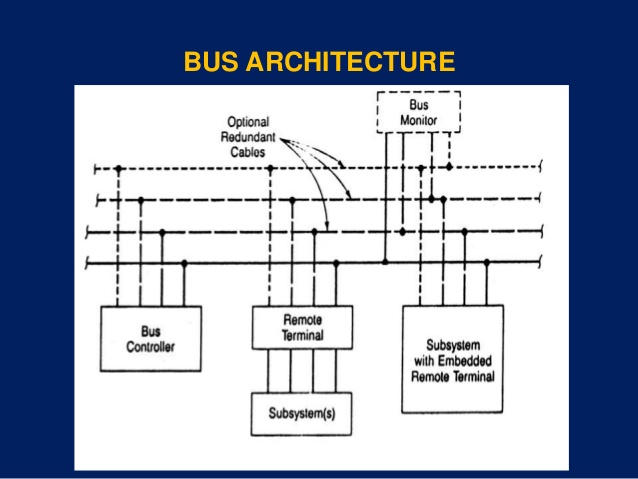
So what exactly makes up a data bus system with the standard of 1553 mil std? It is a whole system that includes a Bus Controller (BC) working to control many different Remote Terminals or (RT). The data bus then works to bring all of these together. One singular data route is then put in place to bring the data from the Bus Controller to the Remote Terminals one at a time.

There are a lot of great uses for this type of technology. Sital Tech, for example, has a hardware chipset meeting the standard which helps with in-vehicle wired network communications. In the event there is any type of physical circuit failure or malicious cyber attack, it will work to detect it immediately.

Real-time detection is important when talking about cyber-attacks and circuit failures. If you have a vehicle, an airplane, spacecraft, or something else, there is a lot of technology in there now. The potential exists that a cyber-attack could bring any of these systems down, posing a lot of risks and potential harm. With the data bus standard met and a Sital chipset in place, you will have real-time detection. Real-time detection is a great way to ward off any potential threat or risk.

The 1553 mil std is not new as it has been around for years. It dates back originally to the 1970s, but it continues to evolve as the years go by and the technology gains in advancement. When you have a data bus system that meets this standard, it provides a higher sense of security than others. You can be confident in the data transfer, know that it will be fast, secure, and complete. When it comes to managing data and making sure your avionics systems function as intended, there is not much more you can ask for.