Author

Clare Louise

Browsing

We discuss what an OPC company is, and also give you an idea of how to incorporate an OPC company in India.

One Person Company in Plain View

One Person Company is basically an Indian government initiative in support of entrepreneurs who have the capability to establish, run and manage a business on their own. They are usually those who have the ability to make a judgment call deemed fit at any given situation.

In India, this concept is provided for under its Companies Act of 2013, which allows one person to create and start a single person economic entity.

 Enticing Reasons to Adopt OPC

One Person Company, as the name suggests, requires just one person to make it a legitimate company. It boasts of autonomy, by virtue of being a separate legal entity that enjoys limited liability protection for the only shareholder.

Since there is only one person required to complete the cast, incorporating an OPC is far simpler than the tedious process that other forms of companies get through under the stipulations provided for in the Companies Act of 2013.

 Thinking Twice on Adopting OPC

The idea of incorporating OPC may seem “a walk in the park.” However, it has complexities just like in any other incorporated business organizations.

The question on how to incorporate OPC Company could well be addressed by the proper authority, the Ministry of Corporate Affairs and reference, which could be found in the law itself.   

The process of how to incorporate OPC Company includes the need to execute a Memorandum of Association (MOA) stipulating all the fundamental data required for the company incorporation. Likewise, you need an Articles of Association (AOA) which provides rules and regulations governing the company.

One Person Company’s MOA

Part of an OPC’s MOA delves on a nomination of a nominee Director by the sole stakeholder. The nominee is given the legal rights to take over as the owner of the OPC in the event that the sole stakeholder becomes incapacitated.

Likewise part of the MOA compels an OPC to transform the business entity into a Private Limited Company if it experiences an annual turnover of Rs.2 crores. Just like bigger business structures, it is also required to file an audited financial statement with the MCA at the end of each Financial Year.

 As such, learning how to incorporate OPC Company should embark on a meticulous study on what an OPC is all about, its leverages, limitations, among OPC’s other distinct features.

How to Incorporate OPC Company in India

MCA has provided a step-by-step guide on how to incorporate OPC Company in India. The guide offers two options:

  1.       Incorporation through SPICe (Without filling Reserve Unique Name) Stakeholders may choose to avail 5 different services namely: Name Reservation, Allotment of Director Identification Number (DIN), Incorporation of New Company, Allotment of PAN and Allotment of TAN) in one form by applying for Incorporation of a new company through SPICe form (INC-32) online. In the event the MCA web portal restricts access on INC-32 forms [or any other forms for that matter], applicants wanting to know how to incorporate OPC Company in India are advised to attach PDF format of MoA and AoA. Reserving a business name may be done simultaneously with filing SPICe.
  2.       After securing a business name, the applicant may file for incorporation of the OPC within 20 days from the date of approval of RUN. After 30 days, the company should file form INC-22 once form SPICe is registered in case there is a need to reconcile differences in the address of correspondence and registered office address.

Consulting Only the Experts

Before entertaining the idea of formation and incorporation of a company in India, entrepreneurs should be able to fully understand the various types of companies that can be formed. A company can be established for a lawful purpose by the right business advisors with a penchant and expertise in company incorporation services in India.

Interestingly, the search for the right corporate service provider in India should not be as hard as looking for a needle in a haystack. 3E Accounting India, known for its excellence and delivering results in accordance with the preferences of the clients, should be able to help you incorporate a company in India.
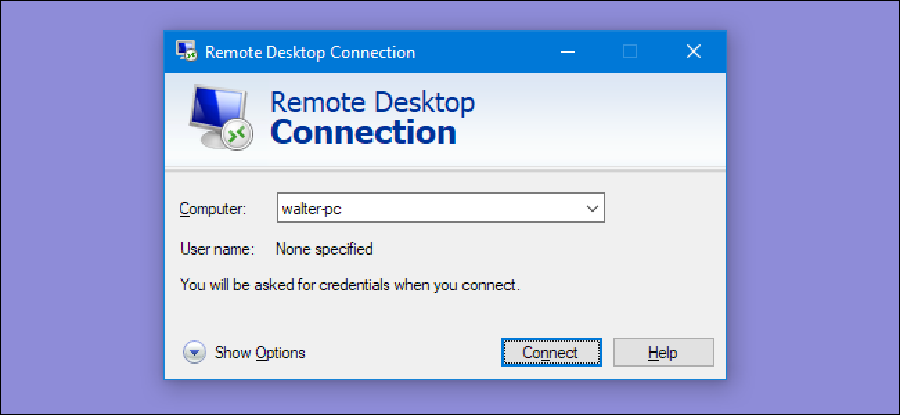
The Internet has simplified the lives of users around the world. Many tools allow you to do a host of important tasks. Such is the case with remote administration programs.With a remote administration program, it is no longer necessary for technical support to be strictly face-to-face, as these tools allow you to control devices that are miles away.

Today these programs offer much more. An example of this is the remote desktop tool which, although it is considered a remote administration software that allows controlling personal computers and servers, has also incorporated other functionalities that allow connection with smartphones and tablets.

Advantages of remote administration

The remote management offers several advantages for those working remotely and need to connect to multiple computers from one place. Some of those advantages are:

Reduce support time

Basically remote administration arose from the need for technology departments to connect to different computers and servers located miles away in a simple, organized way and with the best possible user experience.

  • This is how private VPNs and some corporate intranets that offered this service emerged . However, private VPNs have considerable limitations such as bandwidth management and the lack of practicality in their configuration for later use.
  • This is how the remote tool gained dominance over a large portion of the remote management market. With this program, those responsible for technical support no longer had to go to the place where the computer was located or take it to their workshop.
  • Remote assistance shortens the time to troubleshoot software or install one. As long as the operating system works properly and the computer does not have a hardware failure, remote assistance will help reduce support time.

It’s economic

Remote administration is much cheaper than any face-to-face assistance. You save costs related to the transfer of personnel and also the extra payment for your on-site assistance.

A license for a remote administration program also reduces costs for those who need to connect to different computers at the same time and from the same internet connection.

Support for multiple devices

Until recently remote management for mobile devices was impossible, but now, thanks to The remote tool, it is a reality. Not only can you provide support to personal computers or remote servers, you can also support users who have problems with their mobile devices.

  • And as in its desktop version, you will be able to send and receive important files and all from the same simple application that only requires user authentication and internet connection.
  • When looking at computer security breaches that have occurred over the years, there are a couple of details that stand out.
  • First, that many infractions occur due to social engineering and the failure of the human element.

The second thing that stands out is the failure of security controls when accessing network devices, servers, desktops, or databases remotely, whether access is through a website, application, or a direct connection of a person.One of the causes of this type of non-compliance is forgetting to change the default user names and passwords, using weak user names and passwords, and using insecure communication protocols.We are going to analyze here what a secure remote access consists of, how it works and its benefits.

Airline publication includes everything that supports the safe and legal operation of an airline and its aircraft. It is carried out through a set of industry-standard visual and informational structures driven by operational requirements to ensure the accessibility and usability of organized data. This is the reason OEMs and AMMs are the most rigorously structured airline documents delivered in XML format. It has to do with its level of information density and the complexity involved to support sophisticated aviation machinery. But, XML is not easy to maintain and manipulate, especially if end users do not understand the complexities of this format. But, there are reasons XML is used for delivering documentation. These include the following:

Manage Information

Aircraft are complex machines that consist of digital electronics, power systems, control systems, and mechanical technology. That is why manufacturers offer flight operations manuals in XML format and hire Sonovision technical publication services to manage their publications. Because of the vast supporting documentation for every component, AOM and AMM are huge and must be frequently revised in response to improvements, changes, upgrades, and technical information requirements. 

Manage Revisions and Ensure Faster Delivery of Documentation

Manufacturers of aircraft have technical importance and a legal responsibility to constantly offer aircraft operators the correct, valid documentation for their systems’ operation and maintenance. This makes sense as operators need accurate information to ensure aircraft safety is not compromised. That is why manufacturers have to revise their operation and technical manual information. This way, operators always use the most up-to-date documentation. Manual revisions can be cone 4-8 times every year in the aircraft’s first years of operation.

As complex documentation like the flight crew operating manual or AOM can run into the hundreds of pages when printed, manufacturers need a simpler solution to deliver this documentation on time. This is why they opt for the XML format of this documentation.

Offer Benefits to Various People in the Organization

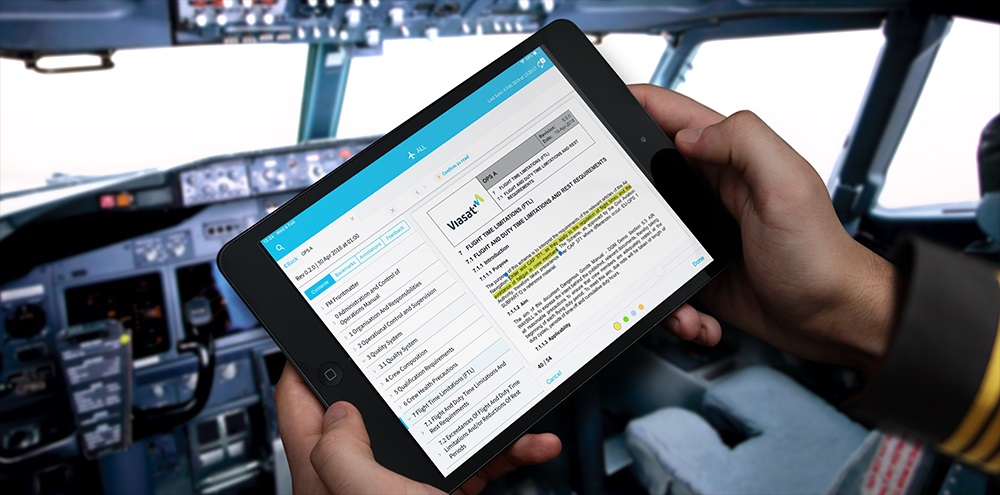
XML technology can benefit technical authors and publishers by accelerating the editing process. It automates routine jobs and offers smart sharing of documents. For airline crew, the technology can deliver a good user experience and enable improved search, with functionality to highlight and annotate documents as well as allow for faster downloads. Finally, digital documents are accessible, flexible, and portable, eliminating the need for paper documents onboard. Also, it synchronizes document updates, offers revision-resilient annotations, and allows fast searches of documents including cross-document search.